
LOCAL SERVICES INC. | GUEST POST
Why aging HVAC equipment can keep cooling a home while quietly driving up energy use, run times and repair costs.
By Ron Madruga, Owner, Local Services Inc.
An air conditioner does not have to be broken to be inefficient. In fact, some of the most expensive cooling systems to operate are the ones homeowners rarely think about because they still turn on, blow cool air and eventually reach the thermostat setting.
That can be especially important in hot climates, where an older system may run for hours every day during summer. A unit that once cooled a home comfortably may gradually need longer cycles to do the same job as components age, airflow changes or efficiency declines. The result is often a higher electric bill, warmer rooms and a system that seems to run almost constantly.
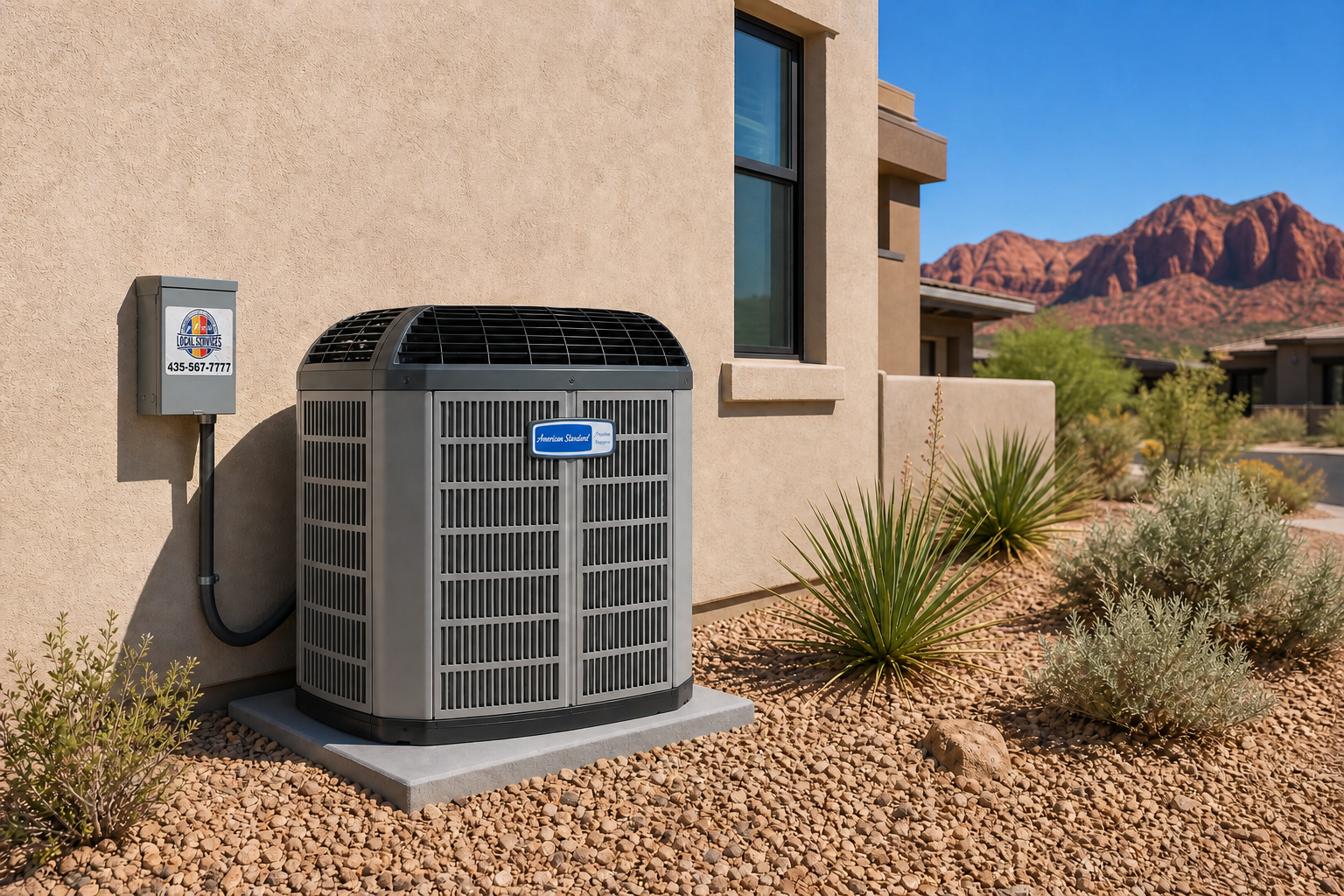
One recent homeowner experience illustrates the point. After replacing an approximately 30-year-old central air-conditioning system, the homeowner’s July electric bill declined from $243 in 2025 to $179 in 2026 – a reduction of more than 26 percent. The replacement included the outdoor condenser and indoor evaporator coil, and the homeowner reported noticeably colder supply air, faster recovery to the thermostat setting and substantially shorter cooling cycles.
The bill comparison is useful, but it is not proof that every homeowner will see the same savings. Weather, utility rates, thermostat settings, household occupancy and other electrical use can all affect a monthly bill. What the example does show is that an aging system can continue to function while operating very differently from a newer, properly matched system.
An Older AC Can Still Cool – Just Less Efficiently
Air-conditioning technology has changed significantly since the 1990s. Modern equipment is generally designed to deliver more cooling per unit of electricity than many older systems, but age is only part of the story. A worn compressor, dirty coils, refrigerant problems, restricted airflow, failing electrical components or leaking ductwork can all make a system work harder than it should.
ENERGY STAR recommends homeowners consider having cooling equipment evaluated when it is more than 10 years old, energy bills are increasing, repairs are becoming more frequent or parts of the home are difficult to keep comfortable.
A homeowner may notice the problem first as longer run times. The system still reaches the thermostat setting, but it takes much longer to get there. During the hottest part of the day, it may seem like the air conditioner rarely shuts off. That does not automatically mean the system needs replacement, but it is a sign worth investigating.
Why Proper System Sizing Matters
One of the most common misunderstandings about air conditioning is that a larger unit must cool better. In reality, HVAC equipment should be sized for the specific home.
An undersized system may struggle to maintain indoor temperatures during extreme heat and can run for very long periods. An oversized system creates a different set of problems: it may cool the space quickly but cycle on and off too often, which can reduce comfort and humidity control while adding wear to equipment.
A proper evaluation should consider more than the tonnage of the outdoor condenser. The indoor evaporator coil, furnace or air-handler blower, ductwork, insulation, window area, orientation of the home and other factors all affect how much cooling capacity the house actually needs.
The U.S. Department of Energy recommends determining a home’s heating and cooling load rather than relying on simple rules of thumb. ACCA Manual J calculations are commonly used by HVAC professionals to estimate those loads.
The Indoor Coil and Airflow Matter Too
Homeowners often focus on the outdoor unit because it is the most visible part of the air-conditioning system. But the equipment inside the house is just as important.
The evaporator coil absorbs heat from indoor air. The blower moves conditioned air through the duct system. If the coil, blower and condenser are not properly matched – or if airflow is restricted – the system may not perform as designed.
That is why replacing only one component without evaluating the rest of the system can leave performance problems unresolved. In the homeowner example above, the outdoor condenser was replaced after the home’s cooling needs were evaluated, and the indoor coil was also upgraded to match the new equipment.
After the change, the homeowner reported that the system reached the thermostat setting faster and ran for significantly shorter periods. Again, those results should not be treated as a universal savings guarantee, but they demonstrate why the entire HVAC system should be considered together.
Signs Your AC May Be Costing More Than It Should
- The air conditioner runs for unusually long periods.
- The system struggles to maintain the thermostat setting in the afternoon.
- Summer electricity usage is rising without a major change in household habits.
- Airflow from the vents feels weak.
- Some rooms remain noticeably warmer than others.
- Repairs are becoming more frequent.
- The system is more than 10 to 15 years old.
- The condenser, indoor coil and blower may not be properly matched.
These symptoms do not necessarily mean a new system is required. Maintenance, coil cleaning, refrigerant corrections, duct repairs, airflow improvements or electrical repairs may restore performance. The important step is diagnosing the actual cause before deciding whether repair or replacement makes sense.
Repair or Replace? Start With an Evaluation
For homeowners in Southern Utah, a professional HVAC evaluation can help separate a repairable problem from an aging system that may be nearing the end of its efficient service life. Local Services Inc. provides air conditioning repair services in St. George, Utah, including diagnostics, maintenance, repairs, system replacement and complete HVAC installation.
A replacement assessment should review the age and condition of the existing equipment, the capacity of the outdoor condenser, the indoor evaporator coil, the furnace or air-handler blower, ductwork and the home’s actual cooling requirements.
Homeowners considering replacement can also ask whether a load calculation is appropriate and whether the proposed indoor and outdoor equipment are properly matched.
The goal should not be to replace equipment simply because it is old. The goal is to understand how the current system is performing, what is causing the problem and which option offers the best combination of comfort, reliability and operating cost.
The Bottom Line
An air conditioner can be technically operational and still be expensive to run. Long cooling cycles, weak airflow, uneven temperatures and rising electricity use are all reasons to take a closer look.
For some homeowners, routine maintenance or repair may solve the issue. For others, especially those with equipment that has been operating for decades, a properly sized and matched replacement system can make a noticeable difference in comfort and run time.
Before making the decision, have the entire system evaluated – not just the outdoor unit.