
Identity fraud has become an increasingly complex challenge for businesses, consumers, and organizations worldwide. As digital technology evolves, criminals are finding new ways to misuse personal information, manipulate identification documents, and exploit weaknesses in traditional verification systems. These developments create particular concerns for businesses that rely on customer identification to meet legal requirements or protect their operations.
Bars, nightclubs, liquor stores, tobacco retailers, and other age-restricted businesses regularly face situations where employees must determine whether an identification document is genuine. While manual inspection remains important, advances in counterfeit document production and online distribution have made the verification process more demanding.
Understanding modern identity fraud risks helps organizations develop stronger security procedures, improve employee awareness, and reduce avoidable vulnerabilities.
How Identity Fraud Has Evolved
Identity fraud traditionally involved stolen documents, altered identification cards, or the unauthorized use of another person’s personal information.
Although these methods still exist, modern technology has expanded the range of fraudulent activities.
Digital editing software, online communication platforms, and sophisticated printing equipment have changed how counterfeit documents are created and distributed.
Fraudsters may also exploit stolen personal information to impersonate legitimate individuals or attempt unauthorized transactions.
For businesses, these developments mean that identity verification is no longer limited to checking whether a photograph resembles the person presenting a document.
Employees must consider document authenticity, information consistency, and the possibility that legitimate personal details have been misused.
A comprehensive understanding of these risks is essential for developing practical verification policies.
The Continuing Threat of Counterfeit Identification
Counterfeit identification remains a significant issue for age-restricted businesses.
Some fraudulent documents imitate recognizable characteristics of government-issued identification cards, including printed layouts, photographs, and other visible design elements.
Although certain counterfeits contain obvious irregularities, others may be difficult to recognize during a brief inspection.
Employees responsible for age verification should understand common warning signs associated with Fake IDs, including inconsistent information, questionable document quality, and discrepancies between identification photographs and customers.
However, the presence or absence of a particular visual characteristic does not always establish authenticity.
Legitimate identification documents can vary considerably between states, countries, and issuing authorities.
Businesses should avoid relying exclusively on appearance and instead develop procedures that combine careful examination with appropriate verification resources.
How Online Platforms Influence Identity Fraud
Online platforms have changed the availability and visibility of counterfeit identification.
Websites, social media communities, and anonymous discussion forums sometimes feature advertisements or recommendations for unauthorized identification services.
Names such as idgods may appear in discussions about counterfeit identification products and the risks associated with purchasing them.
These online sellers sometimes make claims about realistic document appearances or alleged compatibility with verification equipment.
However, promotional statements from counterfeit identification providers should not be considered reliable evidence of document authenticity.
People who interact with unauthorized sellers may also expose themselves to financial scams, identity theft, and legal consequences.
For businesses, this online environment highlights the importance of maintaining consistent verification standards rather than making assumptions about where suspicious identification originated.
Why Traditional Verification Methods Are Vulnerable
Manual identification checks remain common because they are straightforward and require limited equipment.
Employees typically examine a document’s photograph, date of birth, expiration information, and visible security elements.
However, this process depends heavily on individual experience and workplace conditions.
Busy retail counters, crowded nightclub entrances, and poorly lit environments can reduce the time available for detailed inspection.
Employee fatigue may also affect attention, particularly during long shifts involving repetitive identification checks.
Another challenge is the diversity of legitimate identification formats.
Employees may encounter documents from jurisdictions they rarely see, making it difficult to distinguish unfamiliar but valid designs from suspicious ones.
These limitations demonstrate why organizations benefit from consistent policies, employee training, and suitable technological assistance.
The Role of Digital Verification Technology
Modern verification tools can support businesses by automating certain identification-related tasks.
Depending on the system, digital scanners may read machine-readable information from supported identification documents, calculate ages, and conduct additional data consistency checks.
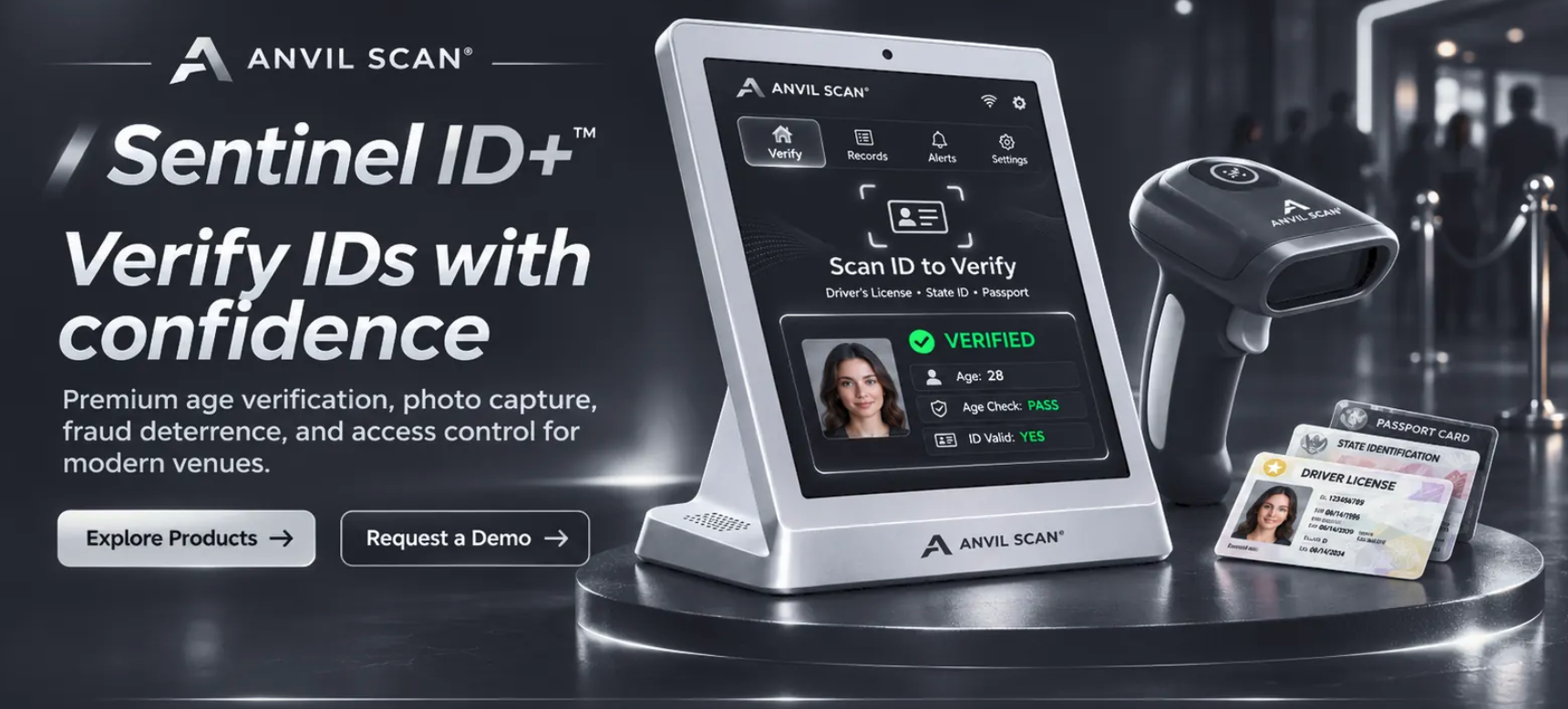
Businesses evaluating these technologies may explore solutions such as anvilscan while comparing equipment suitable for their operational requirements.
Automated age calculations can reduce simple arithmetic mistakes and help employees maintain consistent verification procedures during high-volume periods.
Some advanced systems may also offer additional document authentication capabilities.
However, businesses should understand the difference between reading identification data and establishing document authenticity.
A scanner that successfully extracts information from a barcode does not necessarily prove that the identification card itself is genuine.
Technology should therefore support employee judgment rather than replace careful inspection.
Identity Theft and the Misuse of Personal Information
Modern identity fraud extends beyond counterfeit physical documents.
Criminals may attempt to obtain personal information through phishing messages, compromised accounts, fraudulent websites, or deceptive online transactions.
Stolen information can potentially be used for unauthorized purchases, account access, or impersonation.
Businesses that collect customer identification information must recognize their responsibility to protect that data.
Unnecessary collection or inadequate security controls can increase exposure to privacy incidents.
Organizations should review what personal information they genuinely need, how long it must be retained, and who requires access.
Strong data handling practices are an important component of identity fraud prevention.
Why Employee Training Is Essential
Verification technology is most effective when employees understand how to use it correctly.
Staff members should receive guidance on recognizing suspicious documents, checking customer eligibility, and handling identification inconsistencies.
Training should also cover acceptable identification formats and relevant legal requirements.
Employees need to understand the limitations of their verification equipment.
For example, a successful barcode scan should not automatically be treated as proof that a document is authentic.
Clear escalation procedures can help employees respond consistently when they cannot confidently verify identification.
Periodic refresher training reinforces established practices and prepares staff for changes in document formats or verification procedures.
Developing a Layered Identity Verification Strategy
A layered approach uses multiple verification methods to reduce dependence on any single process.
For age-restricted businesses, this may include physical document examination, photograph comparison, date-of-birth verification, and appropriate electronic scanning.
Employees should also have access to clear guidance when documents appear questionable.
If inconsistencies arise, established procedures can determine whether additional review or supervisor assistance is necessary.
Businesses should design these procedures around their specific operations and applicable legal requirements.
The objective is not to create unnecessary obstacles for legitimate customers, but to make verification more reliable and consistent.
The Financial and Reputational Impact of Identity Fraud
Identity fraud can create consequences beyond an individual transaction.
Businesses that fail to comply with age-restricted sales regulations may face penalties, licensing issues, or other enforcement actions, depending on jurisdiction and circumstances.
Security incidents may also damage customer confidence and place additional pressure on employees.
Poorly defined verification procedures can contribute to inconsistent decisions and unnecessary disputes.
Organizations can address these risks by reviewing existing policies, improving employee training, and evaluating appropriate verification equipment.
However, businesses should not assume that installing new technology automatically guarantees compliance.
Effective risk management requires ongoing attention to procedures, employee behavior, and applicable regulations.
Preparing for Emerging Verification Challenges
Digital identity credentials, mobile driver’s licenses, and evolving authentication systems are changing the future of identity verification.
These technologies may provide new ways to verify customer information, but businesses must understand their capabilities and limitations.
Not every digital representation of an identification document is an officially recognized credential.
Organizations should review applicable requirements before accepting unfamiliar identification formats.
They should also evaluate privacy implications and ensure employees understand new verification procedures.
Regular assessments can help businesses identify emerging risks and update their practices without relying on outdated assumptions.
Conclusion
Modern identity fraud presents complex challenges involving counterfeit identification, online marketplaces, stolen personal information, and weaknesses in traditional verification methods.
Businesses that rely on customer identification must recognize that visual inspection alone may not address every risk.
A stronger verification strategy combines employee education, consistent policies, responsible data handling, and appropriate digital technology.
By understanding how identity-related threats evolve, organizations can improve their ability to recognize suspicious activity, support regulatory compliance, and protect legitimate customers.
Effective identity verification is not a one-time investment. It is an ongoing responsibility that requires practical procedures, informed employees, and a willingness to adapt to changing security challenges.