
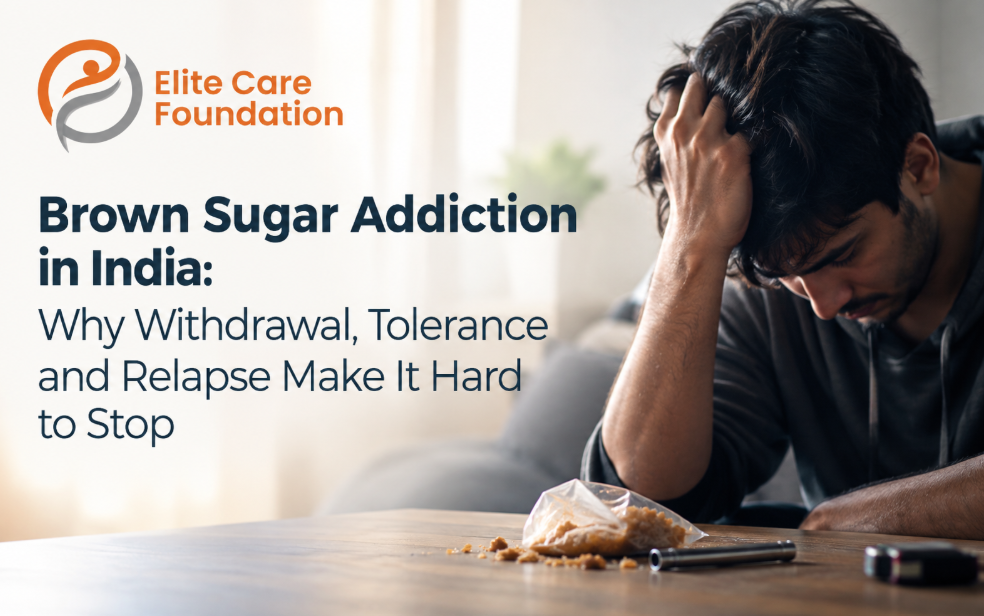
A family rarely uses the words opioid dependence at the beginning. They usually describe what they can see. Money is disappearing. The person is leaving home at odd hours. Sleep has changed. There are repeated promises to stop, followed by sweating, body pain, stomach problems, restlessness and another trip outside. In many parts of India, the substance involved may be called brown sugar, a street term commonly used for an illicit heroin preparation.
The street name can create false confidence. Brown sugar is not a medically standardised product with a predictable strength. Its purity and contents can vary, and a person may not know what else has been mixed into it. That is one reason families should treat unexplained drowsiness, abnormal breathing or inability to wake someone as a medical emergency rather than assuming the person is simply sleeping.
The scale of opioid-related harm is not small. India’s national substance-use survey conducted through AIIMS-NDDTC and released in 2019 estimated about 2.26 crore opioid users and roughly 77 lakh people who needed help for opioid-use problems. These are older national estimates, not a 2026 headcount, but they remain an important indication of treatment need. Globally, the World Health Organization estimated that about 125,000 people died from opioid overdose in 2019.
Why stopping becomes difficult even when the person wants to stop
Repeated opioid use can produce tolerance and physical dependence. Tolerance means that the same amount may no longer produce the same effect. Physical dependence means the body has adapted to regular opioid exposure, so reducing or stopping can trigger withdrawal.
That withdrawal can be miserable: watery eyes, yawning, sweating, muscle and body pain, abdominal cramps, diarrhoea, vomiting, anxiety, disturbed sleep and strong craving. The person may return to the drug not because the family conversation had no effect, but because one dose rapidly removes symptoms that have become hard to tolerate.
This is where a nasha mukti kendra should do more than keep someone away from the drug. The first job is assessment: what has actually been used, how often, by which route, when the last dose was taken, whether alcohol or sleeping tablets are also involved, whether there has been an overdose, and what happened during earlier attempts to stop.
A young adult using brown sugar occasionally for a few months is not the same clinical situation as someone with years of daily heroin use, repeated overdose and severe depression. A fixed programme for both may be convenient for the facility, but it is not individualised care.
Overdose and withdrawal are not the same thing
Families often recognise withdrawal more easily because it is noisy and uncomfortable. Overdose may look quieter.
WHO describes the classic opioid-overdose picture as pinpoint pupils, unconsciousness and difficulty breathing. If the person cannot be awakened normally or is breathing very slowly, irregularly or not at all, emergency care comes first. Naloxone can temporarily reverse opioid overdose where it is available and appropriately used, but emergency medical help is still necessary.
Withdrawal is different. It can drive rapid return to use and severe distress, but uncomplicated opioid withdrawal usually does not have the same classic seizure-and-delirium pattern associated with severe alcohol withdrawal. That distinction matters because families often use one word – detox – for completely different medical situations.
Detox is a beginning, not the treatment plan
Once withdrawal settles, the problem has not disappeared. The dealer’s number may still be in the phone. Salary day still arrives. The same friends, locations, chronic pain, loneliness or family conflict may still be present. Craving can reappear long after the worst physical symptoms have passed.
Evidence-based brown sugar addiction treatment can therefore include medical and psychiatric assessment, withdrawal management, medication for opioid-use disorder when clinically appropriate, individual therapy, motivational work, family involvement and relapse-prevention planning. WHO and UNODC treatment standards support combining medical and psychosocial care rather than treating detoxification as a complete solution.
For families, one of the most useful questions is simply: what happens after detox? Ask how cravings are handled, who reviews medicines, whether depression or anxiety is assessed, what family sessions cover, and what follow-up is planned before discharge.
The period after abstinence needs special respect
A person who has been drug-free for a period may lose opioid tolerance. If they return to the quantity they previously used, that amount may now be more dangerous. WHO lists reduced tolerance after a period of abstinence as an important overdose risk.
That is why relapse planning should be practical rather than moral. Which old contacts remain a risk? How will money be handled initially? What should the family do if the person disappears or starts asking for unexplained cash? Who gets called if craving suddenly becomes intense? Does the person understand that an old dose may no longer be tolerated?
Recovery is not made stronger by telling someone that one lapse has ruined everything. It is made stronger by responding quickly, reassessing risk and getting treatment back on track.
Brown sugar dependence can damage trust, finances and health, but families do not need to solve the entire problem before seeking help. They need accurate information, an honest history of what has been happening and a treatment setting that understands both the medical risk and the life the person will return to.