
You can ask an AI chatbot almost anything at three in the morning and receive an answer within seconds. It won’t get distracted, forget what you were discussing halfway through, or complain that you’re asking too many questions. For people who want quick advice, entertainment, or someone to practice a conversation with, that convenience is difficult to ignore.
But there’s a difference between receiving a well-written response and having a conversation with another person. A stranger might misunderstand your joke, share a completely unexpected story, or introduce you to something you’ve never considered before.
As AI conversations become more sophisticated, random video chat remains interesting for precisely those reasons. The experience isn’t always smooth or predictable, but human interaction offers qualities that automated responses cannot fully reproduce.
AI Chatbots Have Changed What We Expect From Conversations
Not long ago, interacting with a chatbot usually meant receiving scripted answers to basic questions. Today’s AI systems can explain complicated subjects, help users practice languages, and maintain extended discussions on almost any topic.
Some applications also support voice interaction, making conversations feel more natural than typing messages into a traditional chat window.
This has created useful opportunities for people who want to rehearse job interviews, improve communication skills, or organize their thoughts before speaking with someone.
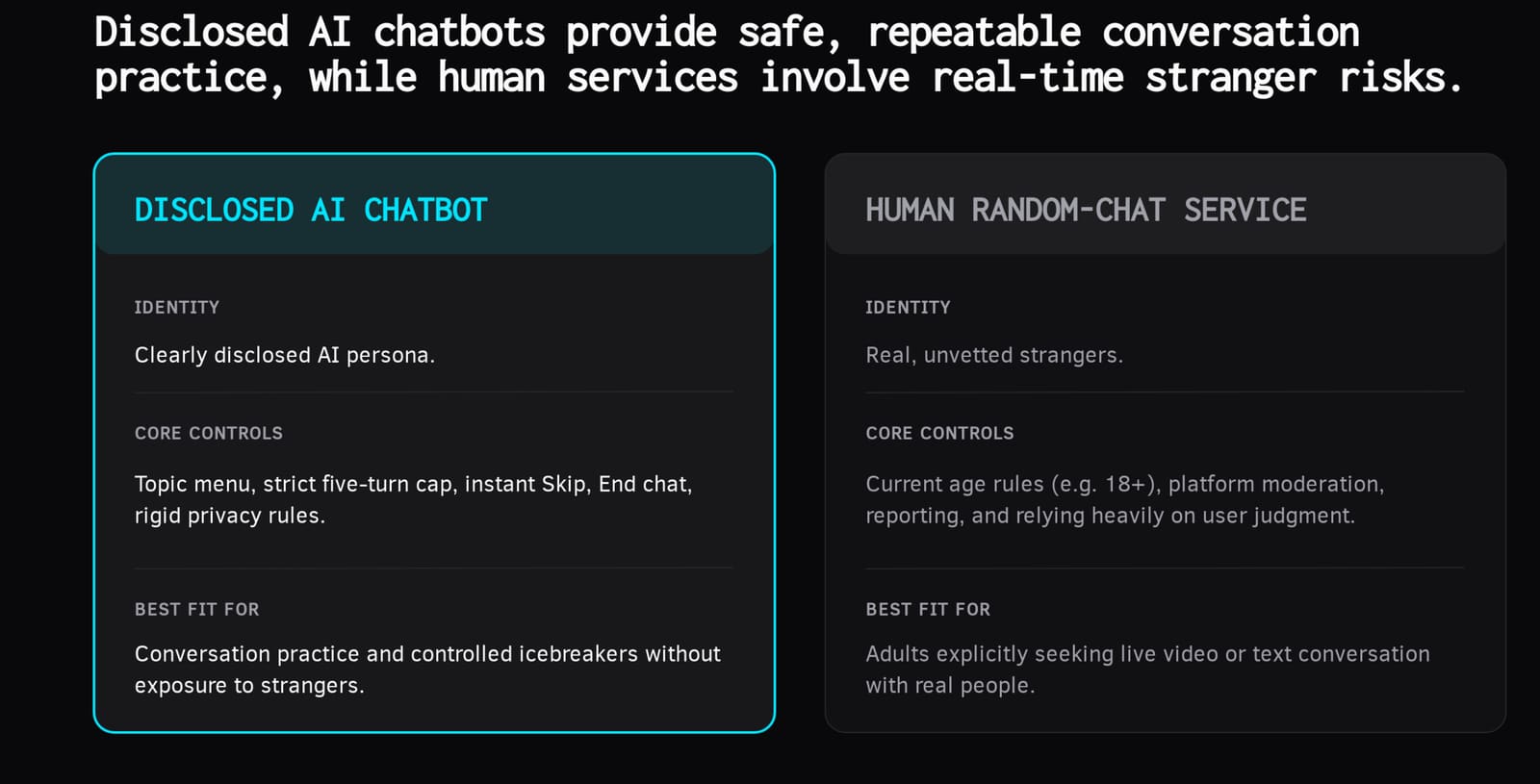
However, the experience remains fundamentally different from talking with someone who has their own memories, relationships, emotions, and personal experiences. AI can generate convincing conversational responses, but that doesn’t make the interaction equivalent to a mutual human relationship.
The Unpredictability of Human Conversation
Imagine asking an AI assistant about someone’s favorite travel destination. It can provide recommendations, compare countries, and describe popular attractions.
They might tell you about a disastrous camping trip, a missed flight that turned into an adventure, or a tiny restaurant they discovered while visiting their grandparents. The conversation could go somewhere neither participant expected.
Real people bring individual experiences into conversations. They disagree, change their minds, make spontaneous jokes, and occasionally tell stories that don’t follow a neat structure.
AI-generated conversations can simulate many of these patterns, but they don’t involve two people independently sharing their lives.
Why Random Video Chat Offers Something Different
Most messaging applications connect people who already know each other. Random video chat takes a different approach by introducing individuals without requiring an existing relationship.
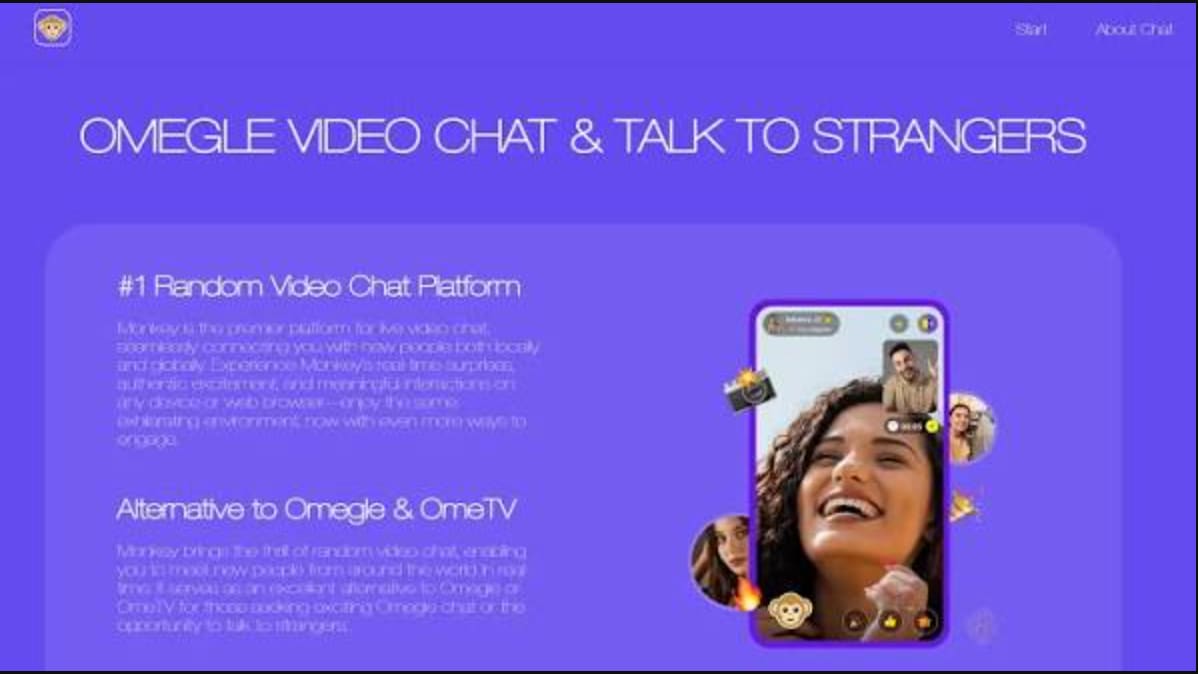
Omegle chat conversations became familiar to internet users because they removed many of the usual steps involved in meeting someone online. Alternative websites continue providing Omegle chat and Omegle video experiences through text and webcam-based interactions.
You might meet a musician practicing a new song, a university student discussing their studies, or someone simply looking for a friendly conversation after work.
Unlike an AI chatbot, a stranger has their own reasons for participating. They may want to share an opinion, learn something, or hear about your experiences.
Facial Expressions and Spontaneous Reactions Matter
Written communication leaves considerable room for interpretation. A short reply can seem rude when it was intended as a joke, and enthusiasm doesn’t always translate clearly into text.
When people video chat online, they can notice genuine surprise, respond to humor immediately, and adjust how they communicate based on another person’s reactions.
AI voice and video technologies are becoming increasingly capable of producing expressive responses. Nevertheless, a simulated reaction is different from watching another person respond to an experience in real time.
AI Can Help People Prepare for Real Conversations
AI can be a useful tool for people who feel nervous about speaking with strangers. Someone learning English, for example, might practice introducing themselves with a chatbot before joining a language exchange or live video conversation.
AI can also suggest discussion topics, explain unfamiliar expressions, or help users understand communication mistakes.
However, practicing with AI doesn’t completely reproduce the uncertainty of human conversations. Real people may speak with unfamiliar accents, interrupt naturally, or respond in ways you didn’t anticipate.
Using AI for preparation and human interaction for real-world practice can offer benefits that neither approach provides alone.
Human Connections Require More Than Convenient Answers
One reason AI conversations feel appealing is their availability. An assistant can respond immediately, even when friends are busy or unavailable.
Human friendships develop through shared experiences, personal boundaries, mutual effort, and the knowledge that another person chooses to participate.
Someone remembering a conversation from last week or checking how an important event went can carry significance because the gesture comes from an independent person with their own commitments.
Still, the possibility of forming a genuine relationship gives human conversations a different emotional significance from automated exchanges.
The Limitations of Talking to Strangers Online
Random video chat isn’t automatically better than communicating with AI. Unfamiliar people can behave disrespectfully, misunderstand boundaries, or create uncomfortable situations.
Some participants may encounter harassment, scams, or inappropriate content. Privacy is also important because video conversations can reveal personal surroundings, and other users may record interactions.
Understanding the strengths and risks of each option allows people to choose the most appropriate communication method for their needs.
Frequently Asked Questions
Can AI conversations replace real friendships?
AI can provide useful interaction and assistance, but it cannot fully reproduce the mutual experiences, responsibilities, and independent perspectives involved in human friendship.
Is random video chat useful for improving social confidence?
It can provide opportunities to practice spontaneous conversations, although experiences vary. Structured language exchanges or moderated communities may be more comfortable starting points.
Why do people still prefer talking to strangers instead of AI?
Some enjoy unpredictable discussions, personal stories, genuine reactions, and the possibility of developing relationships with people outside their existing social circles.
Human Conversation Still Has Its Own Place
AI will continue improving how people access information, practice communication, and receive everyday assistance. Its convenience makes it a valuable addition to digital life.
Random video chat serves another purpose. It creates opportunities to encounter independent personalities, exchange real experiences, and participate in conversations that neither person can entirely predict.
And that’s part of their appeal. Not every conversation needs to be efficient, perfectly structured, or immediately useful. Sometimes, talking with another person is worthwhile simply because you don’t know what they’ll say next.